From 2016 to 2025, Nini Sanadiradze served as General Director of the Union of Tbilisi Municipal Museums, leading the conceptual renewal of memorial museums, developing research-led public programs and strengthening the international presence of Georgian memorial museums. Under her leadership, the Ilia Chavchavadze Literary Memorial Museum received a Special Commendation at the European Museum of the Year Awards (EMYA) in 2023. In 2025, she received the Kenneth Hudson Award for Institutional Courage and Professional Integrity from the European Museum Forum (EMF).
She currently teaches at the University of Georgia and New Vision University. Her research focuses on Caucasian cultural heritage, archival memory, and historical connections between Georgia and Europe, drawing on collaborations with international archives and museum institutions.
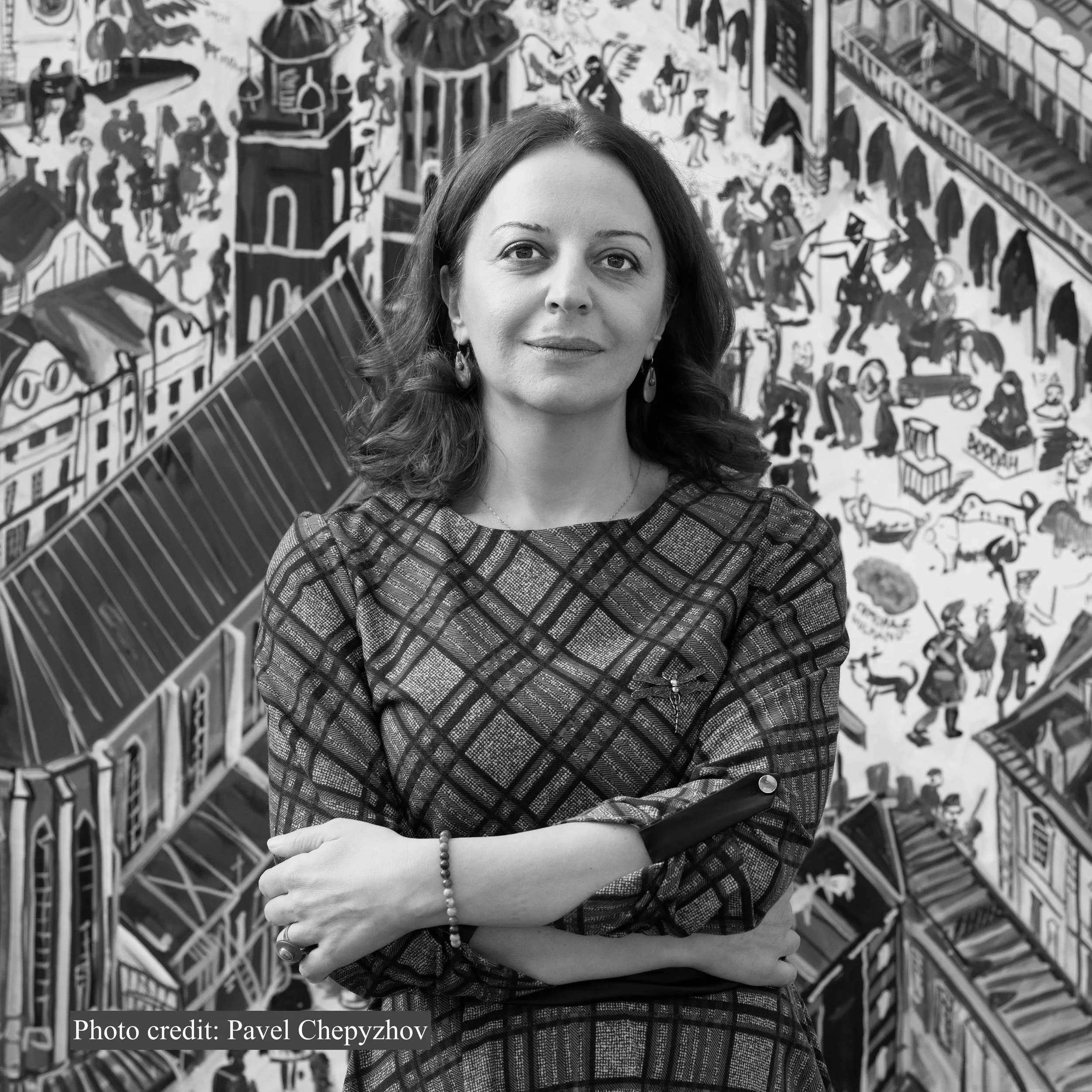
Interview with Dr. Nini Sanadiradze, Georgian art historian, museum professional, and researcher specializing in museum studies, cultural policy, and memory studies.
For those who do not know you, please tell them more about yourself.
I always find it more difficult to talk about myself than about the things that interest me. Perhaps that’s because I’ve never really thought of my life as a collection of separate professional and personal roles.
I’m a very curious person. I love learning, traveling, meeting people, and discovering new stories. That curiosity has been with me since childhood, and I think it has shaped many of my professional choices.
Independence has always mattered to me, in the way I think, the decisions I make, and the work I do. A great deal has changed over the years: the nature of my work, my responsibilities and the environments I’ve worked in. But my interest in how people live, how they shape history, and how they preserve memory has remained constant.
What I particularly enjoy now is being able to ask new questions, explore new subjects, and bring my experience into different settings. There is still so much I want to learn and discover.
How did the Union of Tbilisi Municipal Museums change from the day you started working there to the day you left?
For me, the most important change was that people came back to the museums.
When we began our work in 2016, one of our main goals was to make the memorial museums more accessible and meaningful to the public. I wanted people to see that these were more than museums dedicated to preserving the names of great Georgian writers, artists, and public figures. These are the homes of those people, places where personal stories, thoughts, joys, and sorrows connect with the social, cultural, and political realities of their time. Through the lives, ideas, and work of these people, we can better understand Georgia's history and the development of Georgian statehood.
It was equally important that people felt the museums belonged to them. They could come not only to see an exhibition or take part in an educational program, but also to meet friends, have conversations, relax, or simply spend time there.
Museum restorations, new exhibitions, educational and public programs, and the development of professional practices all contributed to this transformation. We wanted the museums to become living, open spaces that mattered to their communities.
Nine years later, what made me happiest was seeing people come to the museums because they genuinely wanted to be there and felt completely at ease once they arrived.
What do you consider your proudest achievement or most impactful project at the Union of Tbilisi Municipal Museums?
I would find it very difficult to single out one particular project. Each museum had its own history, significance, and distinct challenges.
What I am especially proud of is that we succeeded in bringing Georgian memorial museums into the international museum community. But this was never simply about placing Georgian museums on the international map. I wanted the world to discover the people whose lives and work these museums preserve, their ideas, the times they lived in, and their contributions to Georgian culture and the development of Georgian statehood.
In the case of Ilia Chavchavadze, this meant exploring national identity, freedom, and statehood; with Nikoloz Baratashvili, Georgian Romanticism and its European cultural context; and with Zakaria Paliashvili, the relationship between Georgian traditional music and European opera, as well as the meeting of Orthodox and Catholic cultural traditions.
Over the years, we produced important research publications and renewed several very different museums dedicated to Ilia Chavchavadze, Kote and Soso Tsereteli, Galaktion Tabidze, and Nikoloz Baratashvili. Each exhibition was grounded in research that placed each person within the broader context of their life and times.
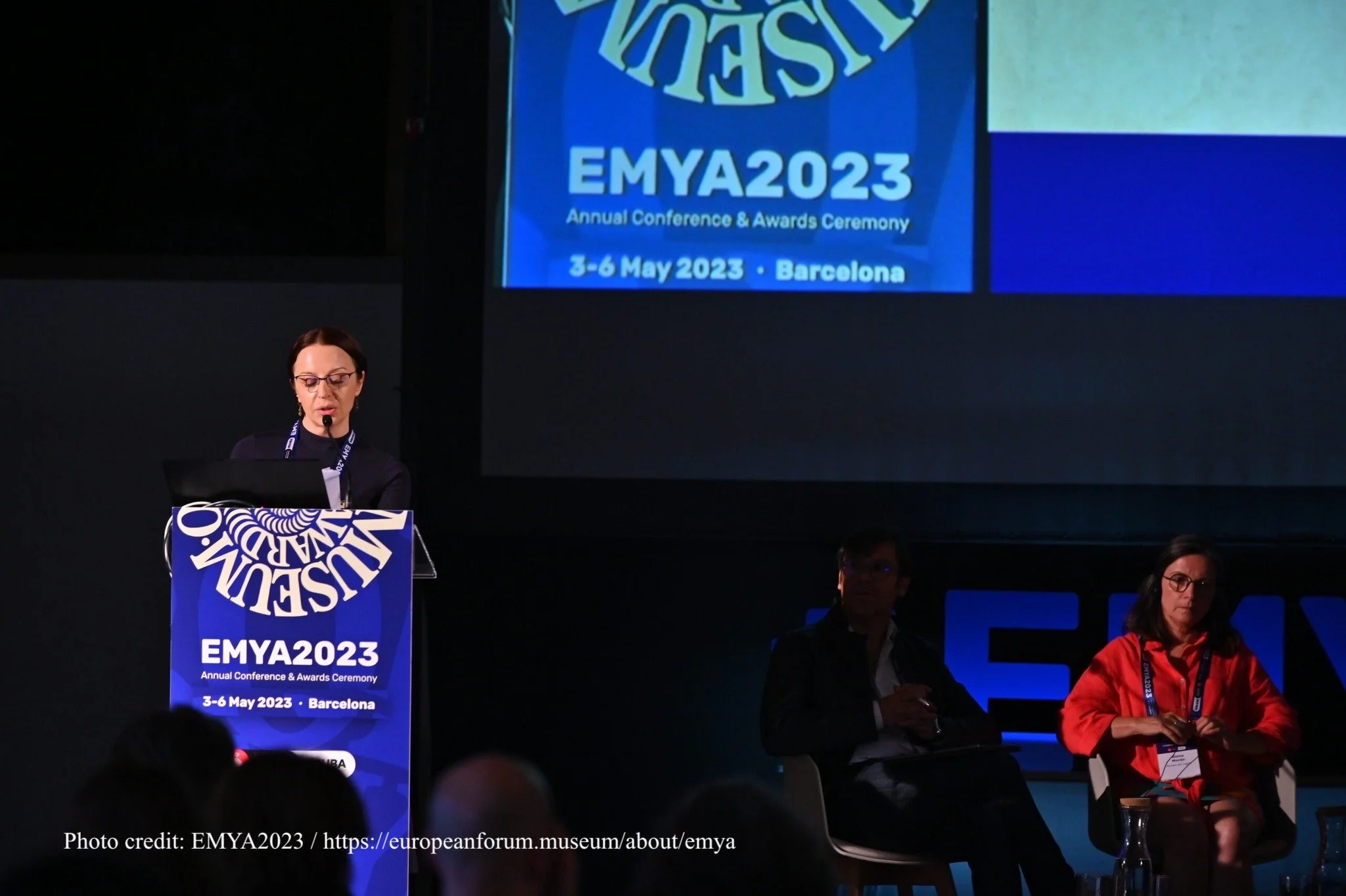
A particularly meaningful moment came in 2023, when the Ilia Chavchavadze Literary Memorial Museum received a Special Commendation at the European Museum of the Year Award (EMYA). The jury's statement was especially meaningful to me: “The first special commendation goes to a museum that pays homage to one of the most prominent national figures of the 19th century, whose actions are celebrated as symbols of national freedom, liberation, and progress. In the spirit of this legacy, the museum invites its visitors to reflect on the historical struggles and draws inspiration from them to tackle the contemporary challenges of society.”
This recognition meant a great deal to me because it affirmed the kind of museum we had hoped to create: a place where history is not only a record of the past but also an opportunity for dialogue with the present.
Do you think museums should serve as a platform for social and political justice? And when I say museums, I mean their leaders and administrations, because I believe arts organizations reflect the people behind them more than their collections and programs.
Yes, I believe museums have social and political responsibilities. For me, though, those responsibilities begin with the heritage they are entrusted to preserve.
Museum directors are responsible not only for safeguarding collections and managing institutions, but also for the people, histories and ideas whose legacies have been placed in their care. This is particularly important in memorial museums. We need to remember whose home we are entering, whose belongings we are preserving, how that person lived, what they hoped for, what they struggled for, and how they engaged with the world around them.
When we were renovating the Ilia Chavchavadze Museum, I wanted to present Ilia as a living, complex human being, with his aspirations, ambitions, everyday experiences, and personal stories. Understanding the complexity of his life also helps us better grasp the significance of his social and political ideas.
At the Galaktion Tabidze Museum, we aimed to reveal the different dimensions of his personality and life: his complicated relationship with his era, the strategies he developed to navigate the pressures of the Soviet system and work around its restrictions, his human vulnerabilities, and, at the same time, the extraordinary genius of his poetry.
The Kote and Soso Tsereteli Museum offers another interesting example. For many people, this is the house where Soso Tsereteli once lived, one of the so-called “airplane boys”, the young Georgians who attempted to hijack a passenger plane in 1983 in an effort to escape the Soviet Union. We wanted to present a much broader picture of the family's history and the period in which they lived. One section of the exhibition is dedicated to Academician Kote Tsereteli, a distinguished linguist and scholar of Aramaic dialectology, and examines his academic and public life. The other focuses on Soso Tsereteli's artistic work and personal history, including his involvement in one of the most controversial events of the 1980s in Georgia, the 1983 hijacking case. An important aim of the exhibition was to recreate the atmosphere of the 1980s and to explore the complex social and moral environment in Georgia during the final years of Soviet rule. We wanted visitors to have the opportunity to consider historical events and individual choices within that context.
For me, this is an essential part of a museum's social and political responsibility: presenting history and human experience with their complexities, contradictions, and historical contexts intact. Such a museum allows society to reflect on freedom, power, individual choices, dignity, and responsibility.
Of course, a director’s personality, values, and professional vision have a considerable influence on an institution. However, a museum should not become a platform for expressing its director’s personal opinions. Its role is to create a space grounded in research and responsible interpretation, where people can engage with difficult questions and encounter different perspectives.
Ultimately, I see museum leadership as a responsibility to the people whose stories and memories have, for a time, been entrusted to our care.
For many people, the changes in your careers in 2025 came as a surprise. Were they unexpected for you? If you could go back, would you do anything differently?
Not to me. On 3 April 2025, the Tbilisi municipal government issued a decree dismissing me from my position almost 21 months before the end of my term. The official grounds were “failure to perform assigned duties”. The decision was not accompanied by supporting documentation, and the materials subsequently provided at my request did not substantiate the grounds for dismissal. On April 28, I challenged the decision before the Tbilisi City Court. As of November 2026, not even a preliminary hearing has been scheduled.
My case is not an isolated one. Other cultural professionals in Georgia have also been dismissed, and a number of their legal challenges have faced similar delays. This is part of a much broader problem concerning the independence of cultural institutions and the conditions in which cultural professionals are expected to work.
The dismissal itself was not unexpected. I had been observing changes in the professional environment for some time, with increasing restrictions on the independence of cultural institutions. I had also experienced considerable pressure, including repeated suggestions that I should resign voluntarily.
Much of this pressure concerned the museums’ public activities and their efforts to connect historical heritage with contemporary social questions. Programs addressing Soviet repression, historical responsibility, and democratic values, as well as the interpretation of the ideas of figures such as Ilia Chavchavadze and Merab Kostava, increasingly became sensitive matters. In my view, these activities were entirely consistent with the museum’s professional mission. A museum cannot meaningfully explore ideas of freedom, dignity, and statehood while avoiding their relevance to the society in which it operates.
Over time, the pressure affected public programs, invited speakers, historical interpretation, and institutional communications. What concerned me most was not simply interference in individual activities, but the gradual narrowing of the space in which museums could exercise their professional judgment.
Directors come and go, and that is a natural process. However, there is a fundamental difference between changing a director and silencing an institution. For me, the central issue was never retaining my position. What matters far more is what happens to a museum afterward - whether it can preserve its mission, its professional principles, and its relationship with the public.
With the benefit of hindsight, I now view certain things differently. Nine years is a long time, and it provides ample opportunity to recognize one’s own mistakes and learn from experience. I would probably be more demanding in certain situations and make some decisions earlier. However, I would not change the principles on which our work was based or our commitment to making museums open, independent, and socially engaged institutions. If the price of that commitment was losing my position, I was prepared to pay it.
Broadly speaking, in the Republic of Georgia's museum sector, do you think women predominate as museum professionals? Why or why not?
From my observations, women do make up the majority of museum staff in Georgia, although the picture is different at leadership levels.
Interestingly, in recent years, more men have also shown interest in museum work, not just in leadership roles. This has been especially noticeable as museums have increasingly become spaces for research and public engagement. At the Union of Tbilisi Municipal Museums, we also had young men actively involved in museum work.
But when it comes to women and museums in Georgia, something else concerns me even more. Aside from the Elene Akhvlediani House Museum, we have virtually no memorial museums dedicated solely to women. Yet so many women have made significant contributions to our country’s history through their creative work, scholarship, and public engagement.
So, for me, the more interesting question is this: why are women so widely represented in the day-to-day work of museums, yet so poorly represented in the historical memory these institutions preserve?
This is a good point! Thank you for raising it. What about Georgian women who have changed history through positive, powerful impact? For example, for readers who are not familiar with Georgian history, Princess Babo Kherkheulidze (born in 1851) was the first woman to dare to take on a female role on stage; Dominika Eristavi (born in 1864) was the first proofreader; Barbare Eristavi-Jorjadze, who in the 19th century was among the first to begin speaking about women’s rights; Kato Melikishvili, Maro Makashvili, and many others. Has the creation of memorial museums for Georgian women who played a significant role in history ever been on the agenda?
I think the question goes beyond the number of memorial museums dedicated to women. The creation of any new museum requires a clear understanding of its purpose, collections, historical context, and intended societal role.
For me, the more important issue is how women's contributions are represented within our existing museums, exhibitions, collections, and historical narratives. Women's histories should be an integral part of how we understand and interpret Georgia's cultural and social development, rather than something addressed only through institutions dedicated specifically to women.
What I can say with confidence is that women's voices remain underrepresented not only in museums but also in Georgia's collective memory more broadly. And I am concerned that recent legislative changes concerning gender and gender-related issues may further weaken their visibility and representation in public life and historical narratives.
How did you work to support and encourage the next generation of leaders in the cultural sector?
Supporting young professionals was an important part of our work. At the Union of Tbilisi Municipal Museums, we had open calls for an internship program twice a year. Young people worked in various memorial museums, took part in research and exhibition projects, helped develop new exhibitions, and became involved in the museums' day-to-day work.
What mattered most was that these internships provided real professional opportunities. We often recruited new staff from among the program’s participants. Between 2016 and 2025, more than 30 young professionals joined the Union. For me, it was about giving young people the opportunity to find their place in the museum field and to grow through real, hands-on experience.
What advice would you give to someone just starting out as a museum leader? What would be your most valuable piece of advice?
First of all, I would tell them that a museum is a living organism and that every object has its own character. It is important to look beyond the object itself and ask what lies behind it, what stories it holds, what memories it carries, and how it came to be in the museum.
I would encourage them never to lose their curiosity and to remember that history is made every day, and museums are part of that process. What we do today, the decisions we make, and the things we choose to preserve will one day become history themselves.
Where are you in your professional journey now?
I’m well, thank you, perhaps a little reflective, too. I’m currently in Basel, where I’ve been working with colleagues at the Museum der Kulturen, exploring some fascinating material. Before coming here, I was in Bern for the King Albert Mountain Award ceremony. I had nominated Mtisambebi (Mountain Stories), an independent Georgian media project whose founder, journalist Gela Mtivlishvili, became one of this year’s laureates.
It’s been quite a year, full of travel, interesting encounters and new experiences. And now I’m looking forward to returning to Tbilisi.
What are you most looking forward to discovering or achieving in the next stage of your career?
What excites me most is the feeling that the work I am doing now remains connected to what has always interested me: bringing together stories, people, and events scattered across different places to form a larger picture.
When I worked in museums, this meant finding connections between objects, documents, and personal histories. Today, that same curiosity has taken me into different settings. Whether I am exploring Georgian history from a new angle through Polish archives, discovering Georgian heritage preserved in collections abroad, or researching the cultural connections that have linked Georgia with Europe, I am still following the same interests.
My research at the Verdaguer House Museum in Barcelona, my encounters with the historical and cultural landscapes of the Alps, and my exploration of the collections at the Museum der Kulturen Basel each raise new questions and allow me to look at familiar histories from a different perspective. Perhaps that is what I look forward to most: discovering new connections, bringing fragments together, and giving new life to stories that are still scattered across archives and collections.
For now, I am grateful for the opportunities to continue my research and professional work through international collaborations. I hope that, in time, Georgia will once again offer an environment in which cultural institutions can work independently, guided by their professional principles rather than political expectations.
