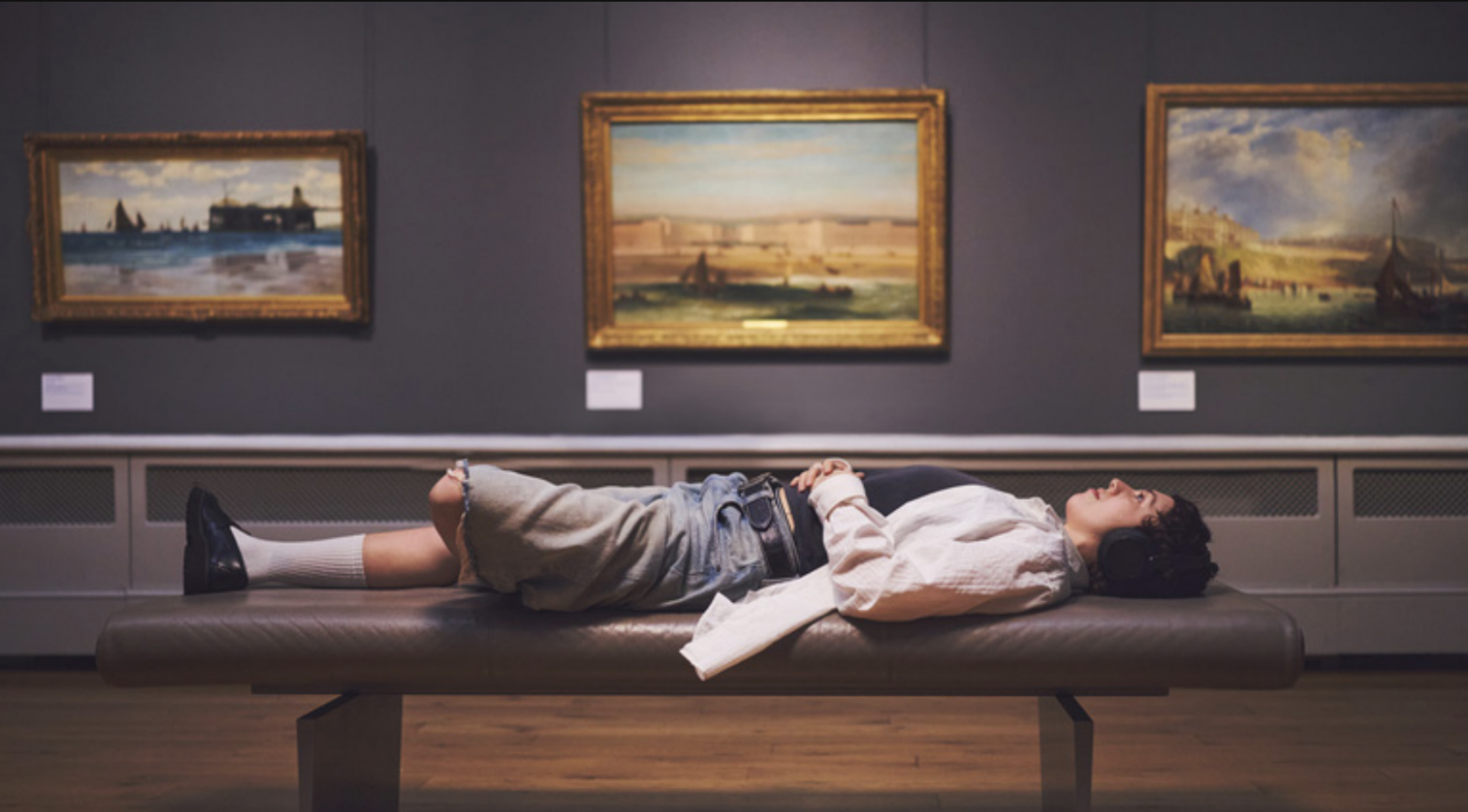
Visitor at Brighton & Hove Museums. Photo: © Will Hartley / Art Fund 2026
A new health guideline has been dropped: one hour a month spent in a museum or gallery.
This recommendation comes from a recent report by the UK charity Art Fund, in partnership with Daisy Fancourt, a Professor of Psychology and Epidemiology at University College London.
Drawing on more than 30,000 studies, “The Recommended Dose of Art” report argues that visiting galleries and museums is a necessity, not a luxury.
According to the report, going to a museum once every 365 days does not allow us to reap all the health and well-being benefits that cultural experiences provide. Professor Daisy Fancount recommends a dose of Art from Art Fund, spending one hour a month at a museum or gallery. Similar recommendations, like eating our 5-a-day of fruit and veg or getting our 10,000 steps, have been powerful nudges for us to prioritize other health-promoting behaviors in our busy lives.
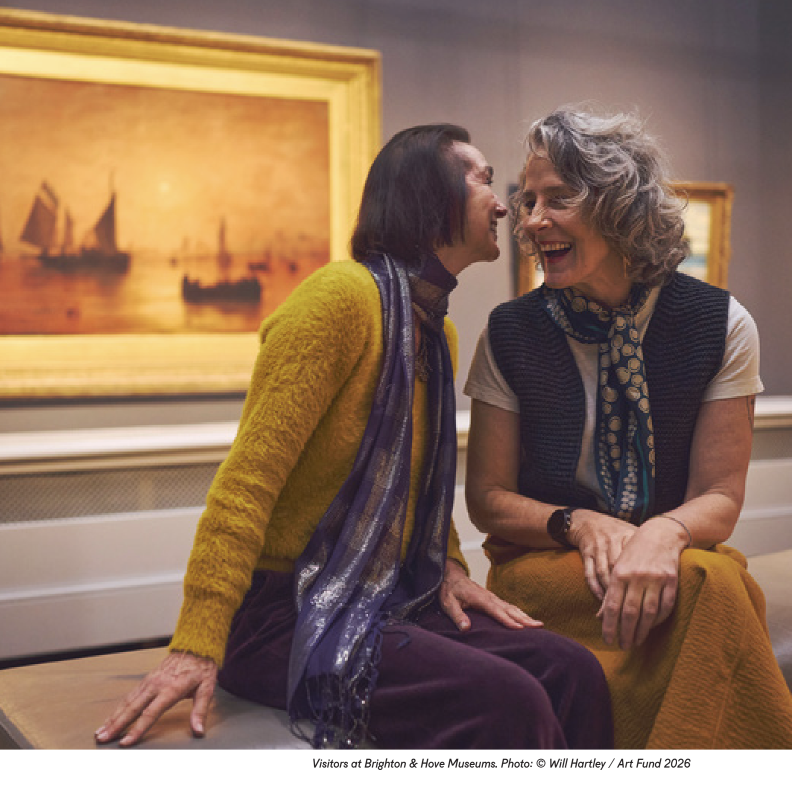
Visitors at Brighton & Hove Museums. Photo: © Will Hartley / Art Fund 2026
Key highlights of the report:
Over the past decade, studies have begun to suggest that arts experiences may also have preventative benefits. Studies of thousands of people have found that people who regularly visit museums, galleries, and other cultural events have nearly half the risk of developing depression over the next ten years, even when factors like wealth, physical health, and social lives are removed from the equation. These benefits stretch beyond the individual and into society. Based on current behavior among older adults, this reduced rate of depression is estimated to save the NHS around £255 million every year, with broader productivity benefits of £3 billion.
Those who are engaged in cultural activities like visiting museums and galleries every few months or more have a 43% lower risk of developing dementia in that timeframe.
Scientists have found that older adults who regularly visit museums and galleries tend to develop frailty later in life and show a slower trajectory of frailty once symptoms begin to appear. By age 80, adults who have never engaged in the arts are 1.3 times more likely to be frail, and this is in addition to the effects of being physically and socially active in other ways.
Some of the benefits of cultural engagement for physiological processes such as stress also appear to have cumulative effects on disease risk. A Swedish study found a lowered risk of coronary heart disease of around 34% in culturally engaged older adults. In China, scientists found this group had a 35% lower risk of developing type 2 diabetes (even after accounting for other variables at play), and similar findings have been reported in multiple other countries.
Essentially, the evidence shows that being both physically and artistically active is the best combination for healthy aging. Incorporated into our lives in this way, art doesn’t just help us survive - it helps us thrive.
The sense of fulfillment we get from art gives our personal well-being a measurable boost. One study estimated that visiting museums provides wellbeing benefits equivalent to a £3288 pay rise, compared to that of participating in sports, at just £1538, and this kind of flourishing in our everyday lives has the bonus effect of making us more resilient - physically and mentally - to difficulties that may come our way.
Last but not least, cultural activities such as visiting museums and galleries enhance our well-being by combating loneliness. 82% of people claim the arts make them feel socially connected.
In conclusion, activities such as visiting museums and galleries offer multiple, measurable, interconnected benefits. They keep us socially connected, emotionally balanced, cognitively fit, physically active, functioning, and flourishing for longer. The more regular and sustained this activity is, the better the results.